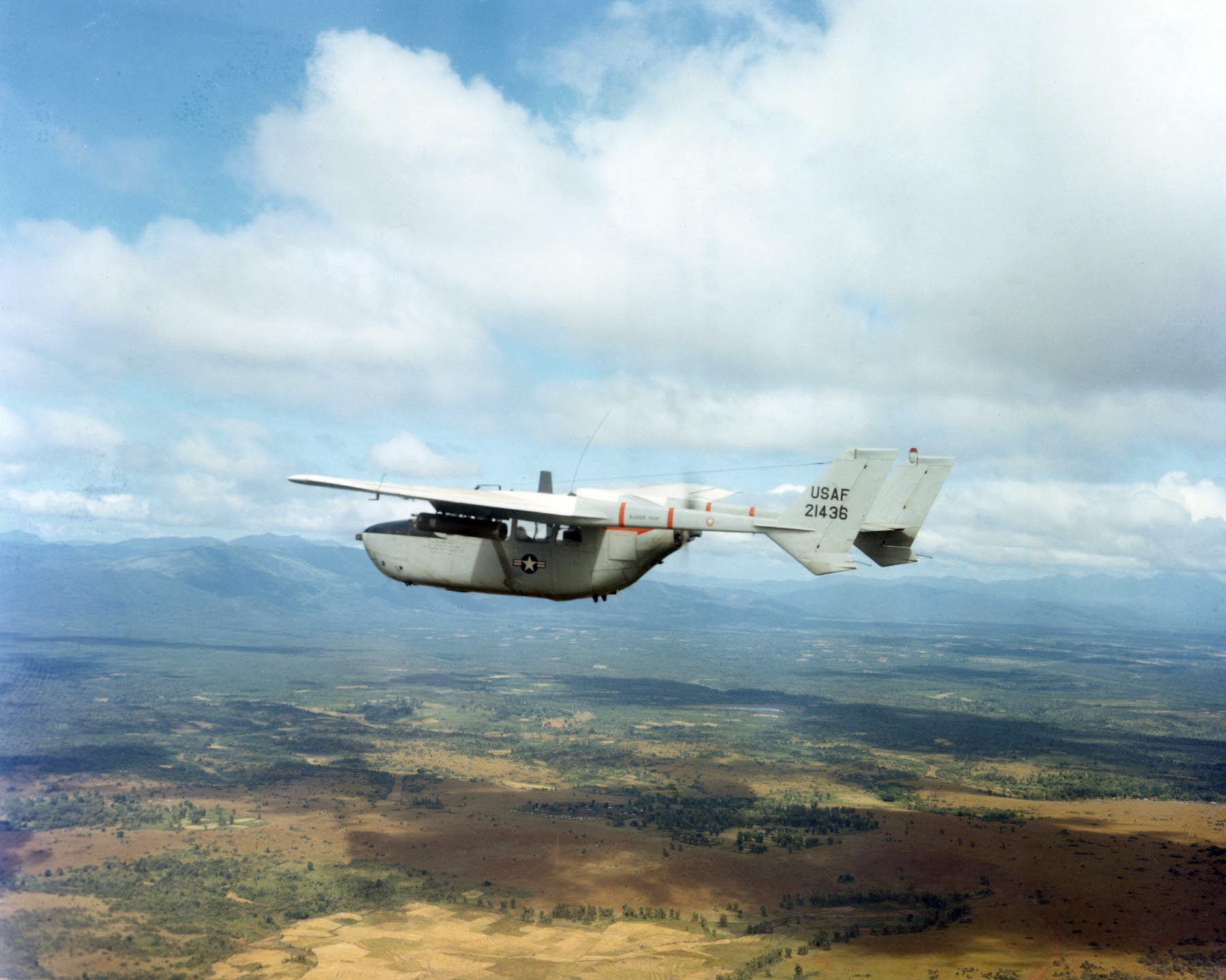
USAF 67-21436 · Cessna M337B · O-2A “Oscar Deuce”
Bringing N33702 Home.
The ongoing restoration of a Vietnam-era forward air control aircraft — the airframe, the research, the parts, the paint, and the people.
Tail No.
N33702
USAF S/N
67-21436
MSN
337M-0142
Type
Cessna M337B
Engines
2 × IO-360
Role
FAC / O-2A
01 · The Aircraft
A twin-boom Skymaster built for the war it didn’t want to be in.
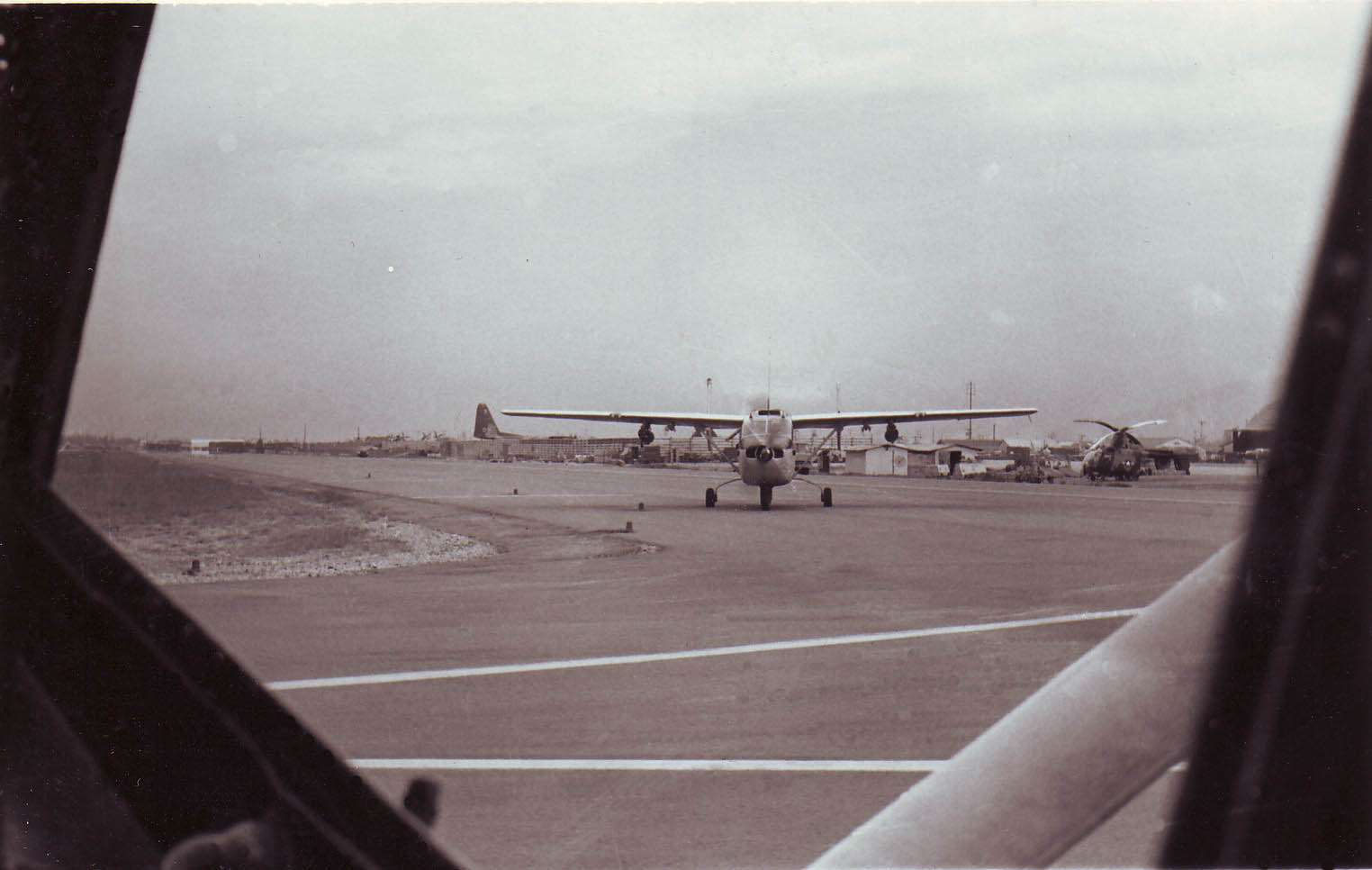
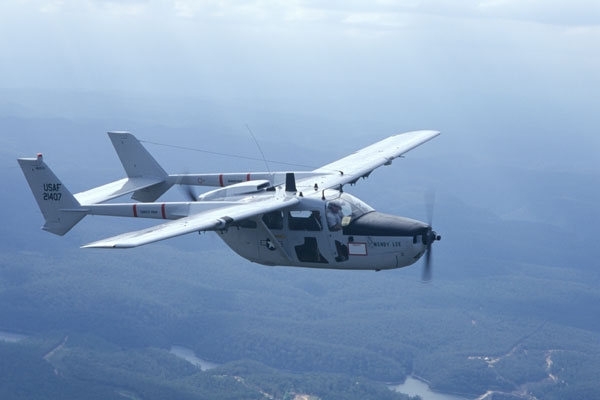
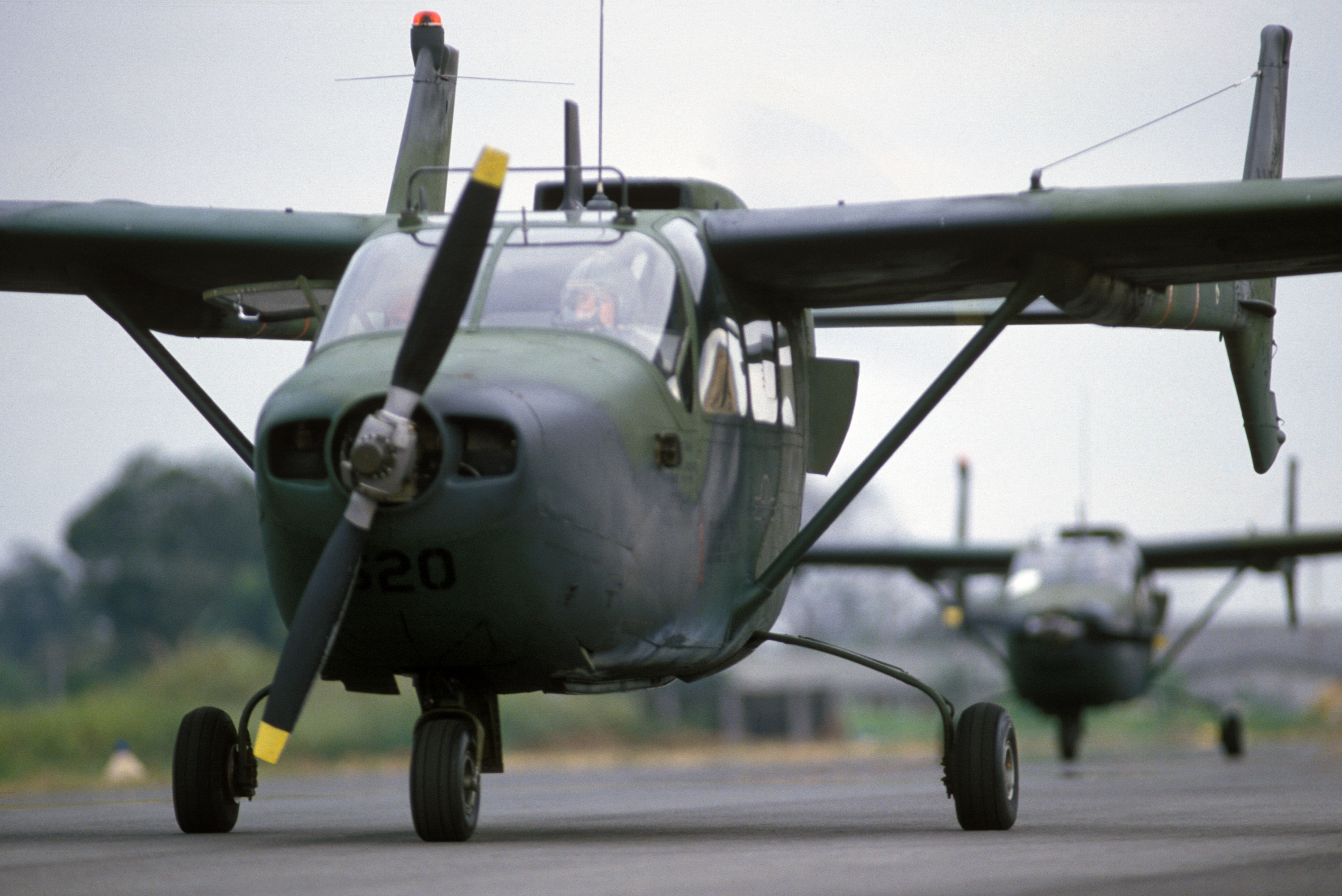
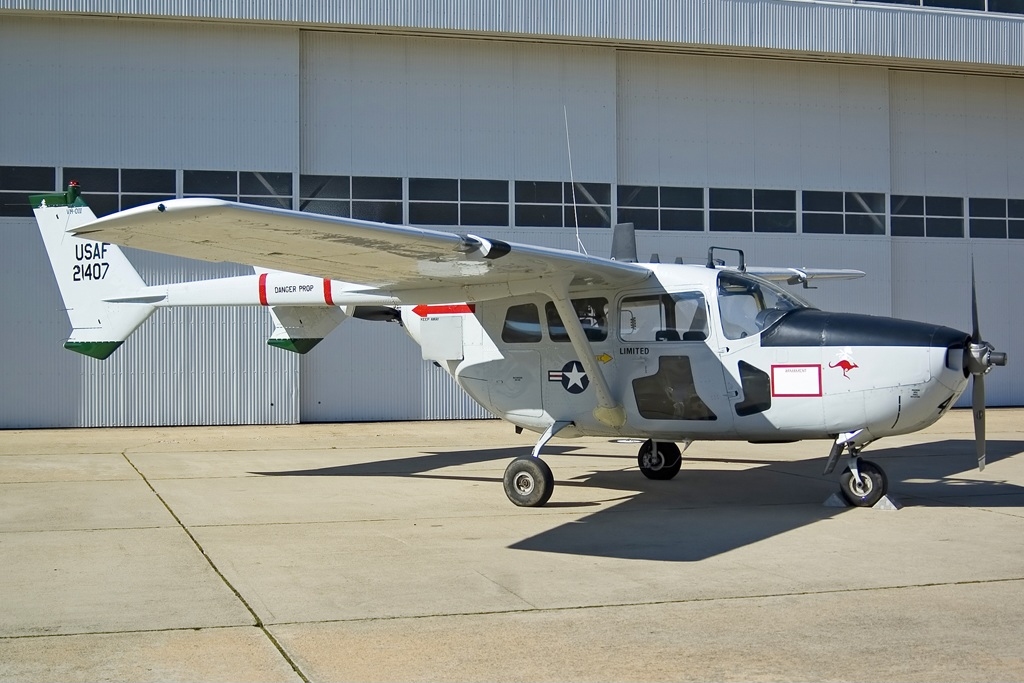
In late 1966 the U.S. Air Force selected a militarized version of Cessna’s Model 337 Super Skymaster to supplement the O-1 Bird Dog as a Forward Air Controller in Southeast Asia. Distinguished by twin tail booms and a tractor-pusher engine layout, the airplane could absorb ground fire and still bring its crew home — a quality that endeared it to the men who flew it.
N33702 rolled off the Wichita, Kansas line in 1967 as USAF serial 67-21436, Cessna military serial 337M-0142. It joined a fleet of 532 O-2s built for the Air Force over three years of production, and served in the FAC and psychological-operations roles from Vietnam through Air National Guard duty in the 1980s.
Why the O-2A mattered
Cruising slowly at 140 knots with a thousand-mile range, the “Oscar Deuce” could loiter over a small battle area for hours, marking targets with white phosphorus rockets, coordinating fast movers, and passing intelligence back to the ground. 178 were lost in Vietnam. The men who flew them called themselves the traffic cops of Southeast Asia.
02 · Restoration Progress
Where we are, what’s next.
A working log of the airframe, engines, avionics, and paint work as they happen. Nothing hidden — the good news, the surprises, and the deferrals.
JUN 2026 · Milestone
Airframe acquired & ferried to home hangar Complete
N33702 arrived at the restoration hangar with logbooks intact and a mostly complete airframe. Initial airworthiness inspection identified the priorities: engines, hardware, corrosion, and period markings.
JUL 2026 · Documentation
Dual-document parts research established Complete
Working set assembled: Cessna P443-12 Illustrated Parts Catalog for civil 337 components and USAF T.O. 1L-2A-4 for the 1967 M337B/O-2A. FAA TCDS A6CE identified as the governing certificate; Cessna drawing 1500004 confirmed as the military-effectivity baseline for MSN 0142.
AUG 2026 · Historical
Tail identity confirmed from period photography Complete
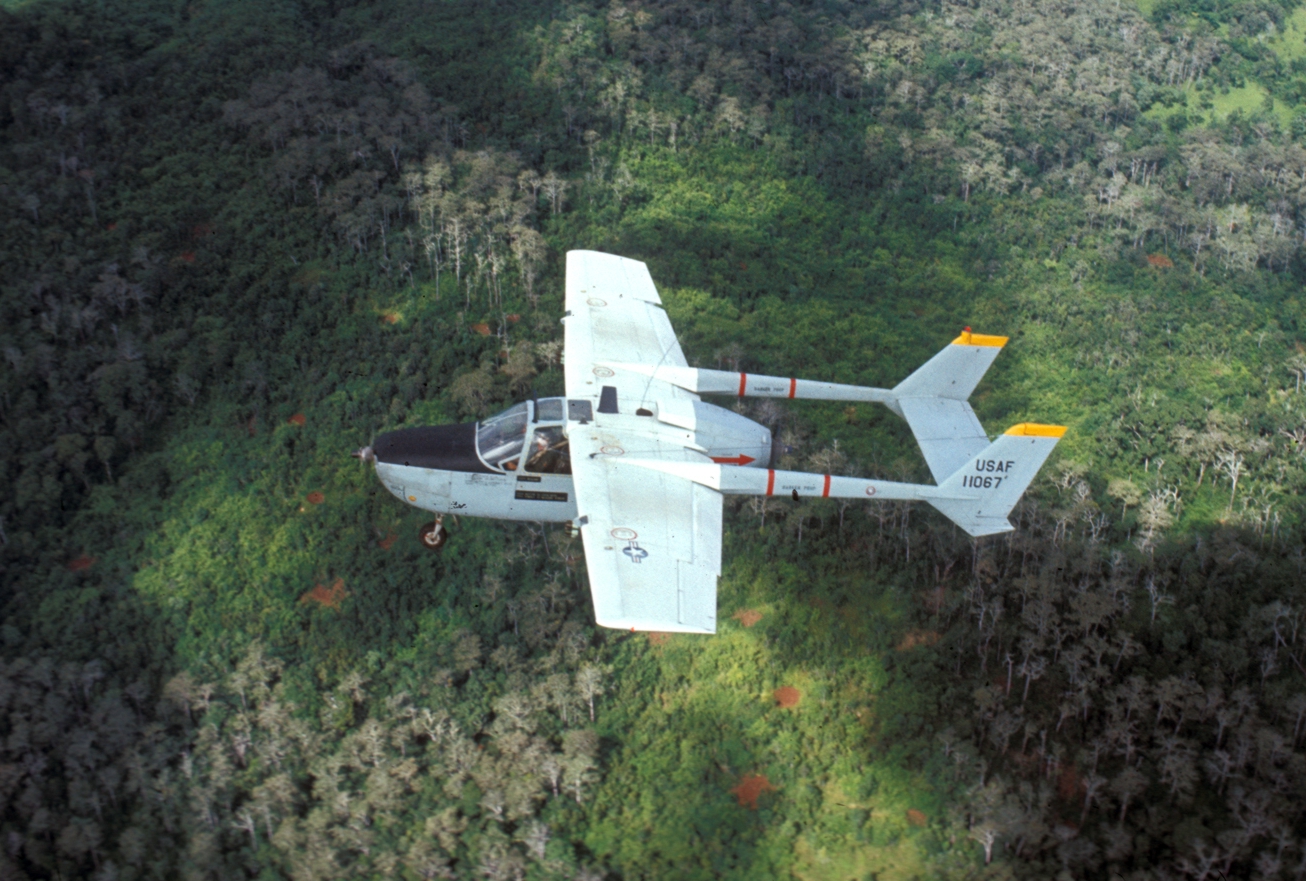
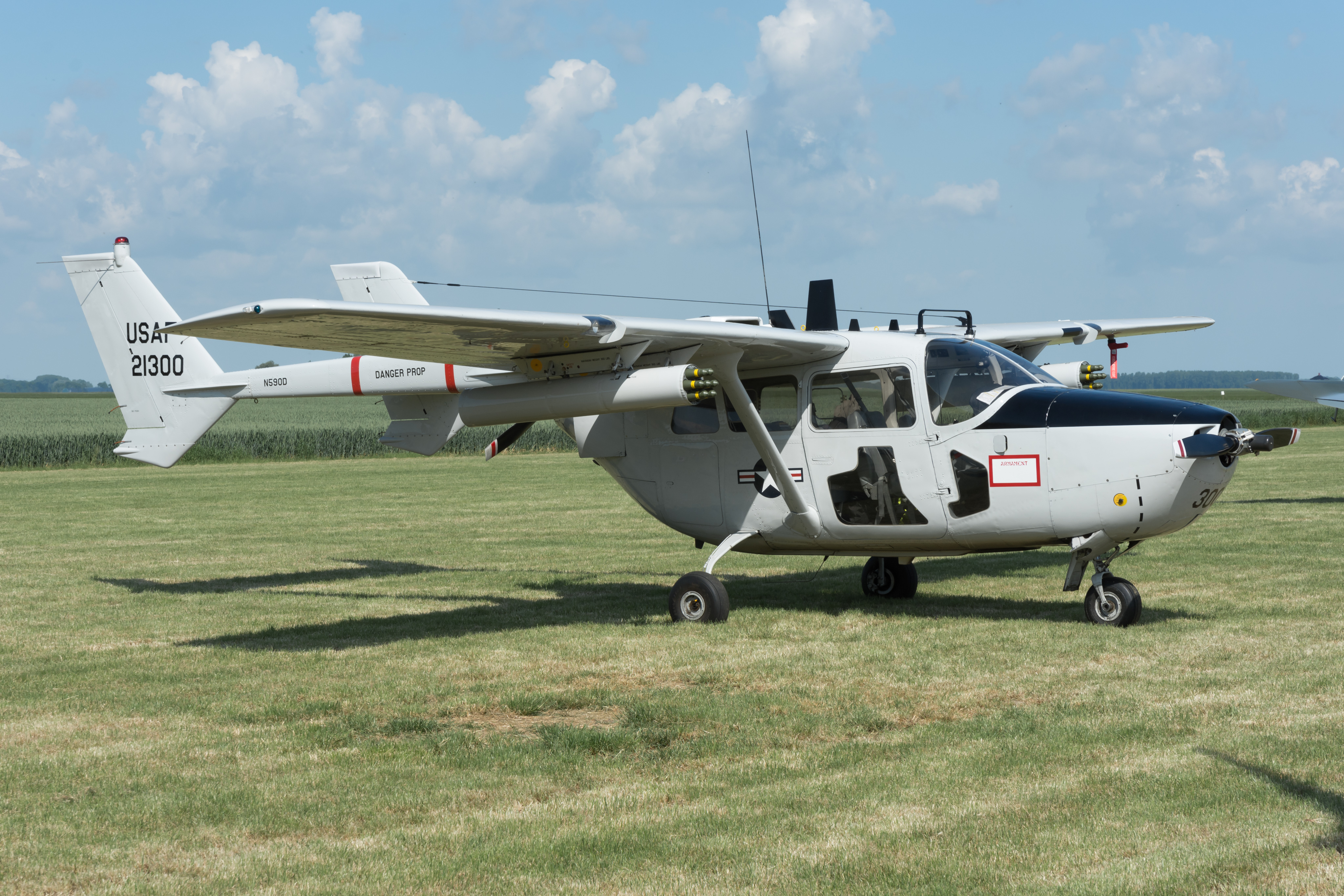
A period O-2A photograph resolved the tail marking as “USAF 21436,” matching N33702’s military serial. Conventional denoise and local-contrast work recovered stencil blocks without inventing placard lettering.
SEP 2026 · In progress
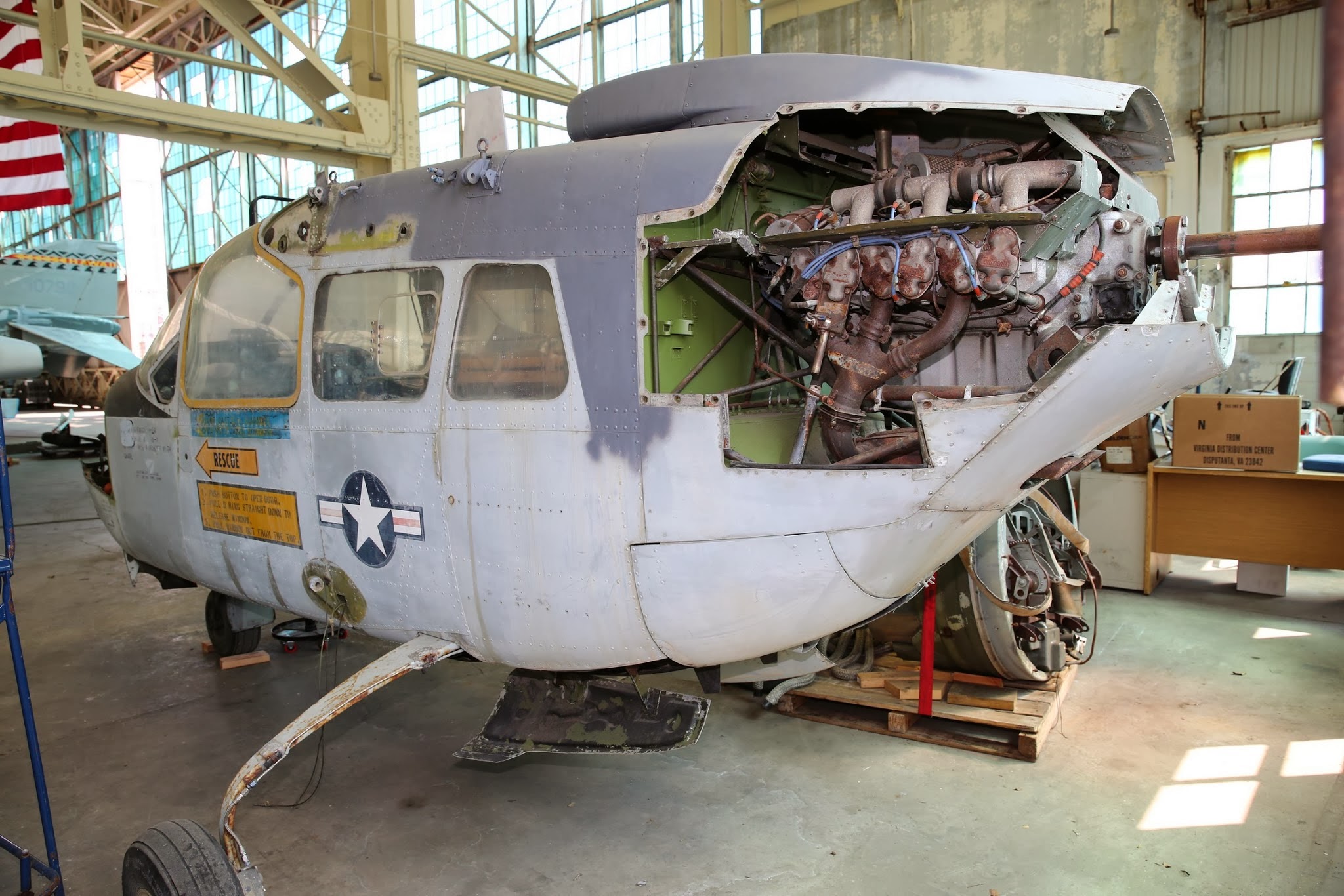
Powerplant planning & factory-exchange evaluation Active
Evaluating a $59,020 factory-rebuilt R-IO-360-DB9B exchange versus a $48,800 IO-360-D overhaul. Approved model, installation-specific accessories, paperwork, core eligibility, warranty, and freight all being verified before commitment. Working reserve for two constant-speed propellers and governors: ~$12,000–$17,000.
SEP 2026 · Sourcing
MAU-3A sway bolts & 1512041 skid family Active
Weekly Monday scan running across Barnstormers, Skymaster communities, salvage yards, and eBay for the 1512041 skid family (LH longitudinal, RH forward, RH aft, plates -5 through -8). Sample-based CMM scanning kept as a disciplined fallback.
Q4 2026 · Planned
Interior, cockpit audio, and egress display hardware Planned
AN/AIC-18-marked interphone controls (period-correct) with AN/AIC-25 as an upgraded fallback. Canopy-breaker / egress display sourcing continues alongside modern functional substitutes. Period-correct cockpit placards deferred until source-quality lettering evidence exists.
2027 · Planned
Southeast Asia camouflage & first flight Planned
Return to period-correct FAC markings pending completion of powerplant, paint prep, avionics acceptance testing, and phase-one flight testing.
03 · Aircraft History
From Wichita to Vietnam and back.
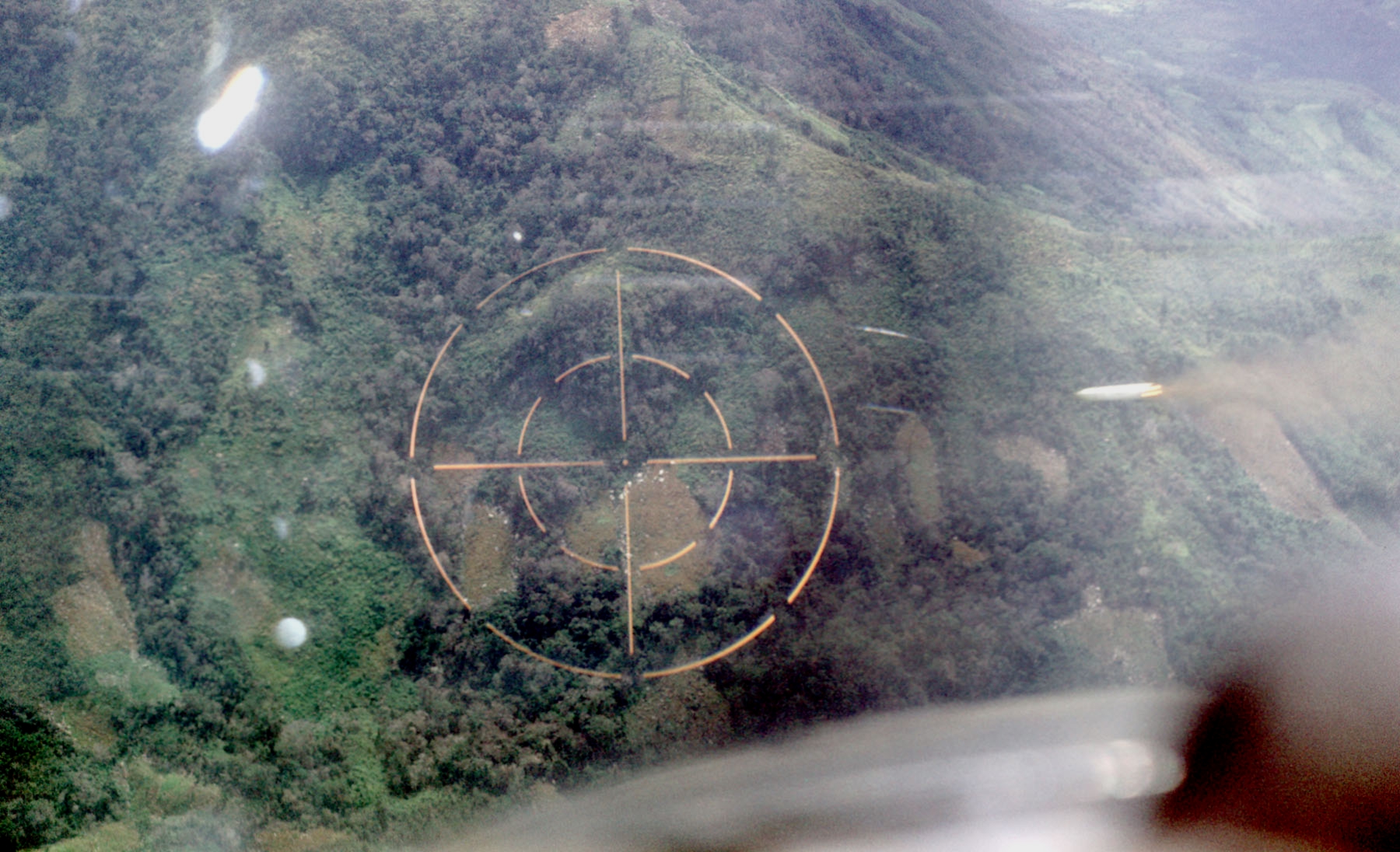
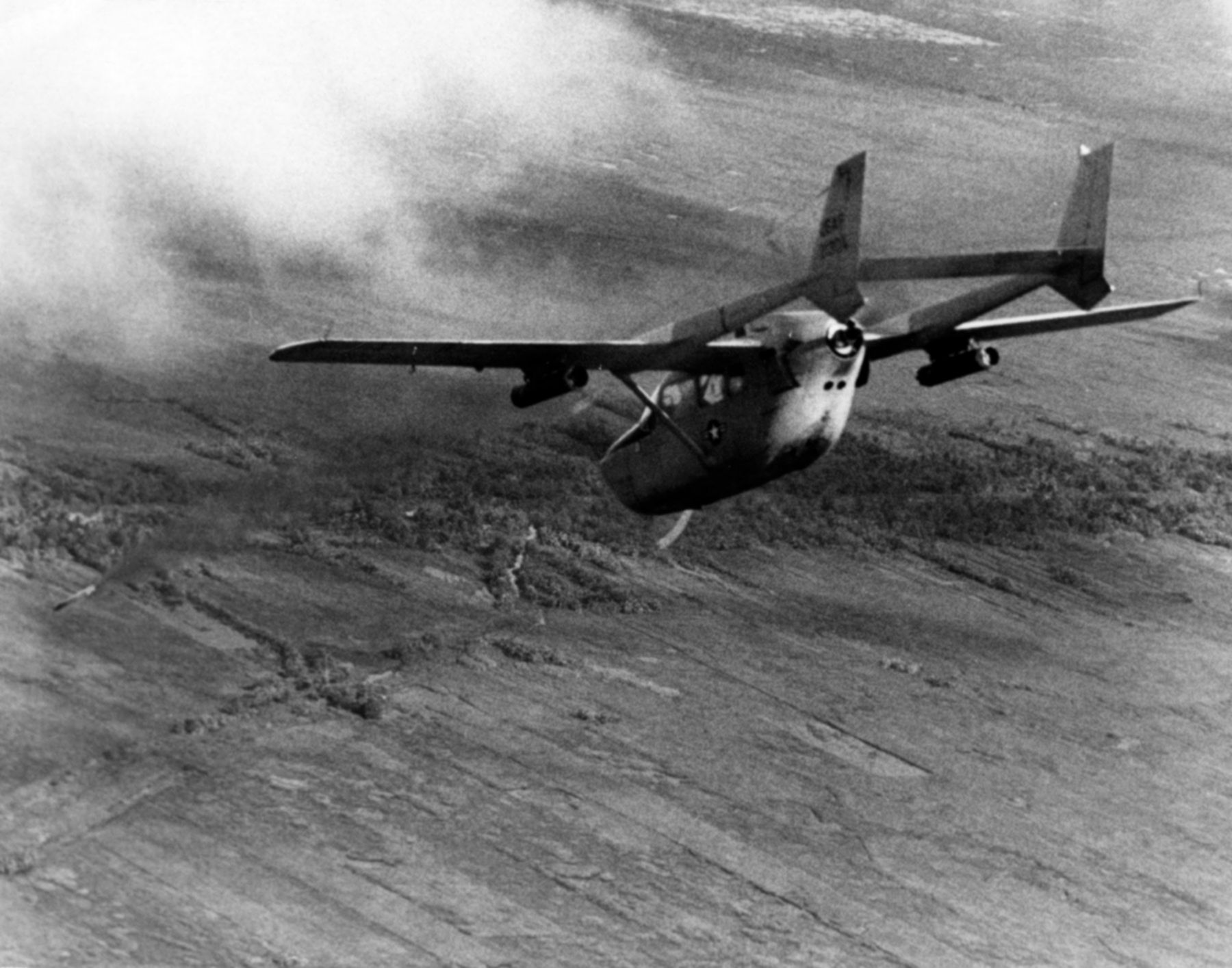
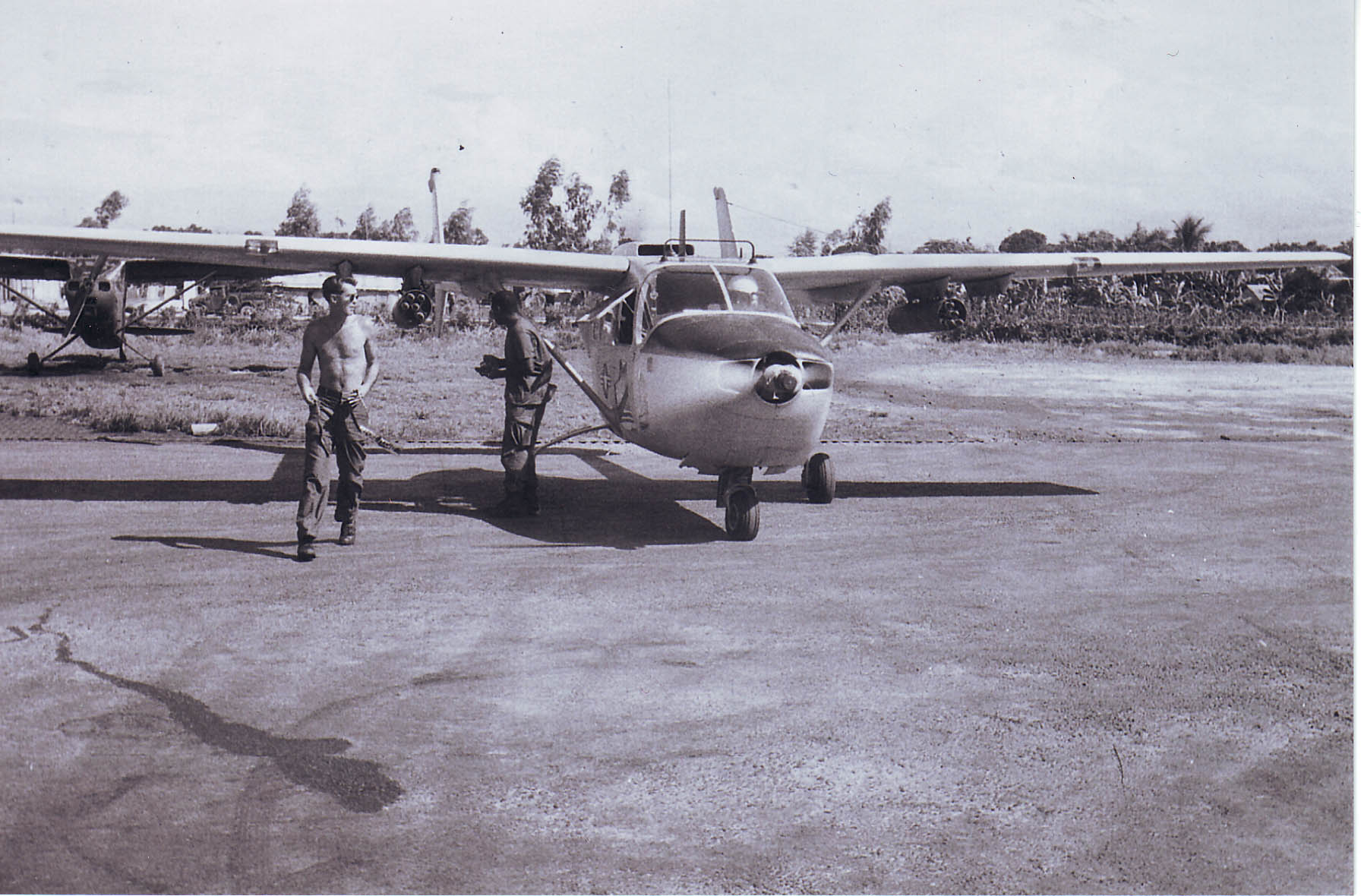
Cessna delivered 337M-0142 to the U.S. Air Force in 1967. In service the aircraft was identified as USAF 67-21436 — the tail marking now recovered from period photography. Like its stablemates it wore the four-color Southeast Asia camouflage and carried underwing pylons rated for smoke rockets, minigun pods, and flares.
Post-Vietnam O-2As continued to operate with USAF and Air National Guard units into the late 1980s. When they were finally released from military inventory, most were shipped in disassembled sections to civil disposition — a handful found their way into museums, a few into warbird private ownership. N33702 is one of the latter.
Governing documents
FAA TCDS A6CE is the certificate under which the M337B is airworthy. Both the 337B and M337B carry a 4,300-pound maximum takeoff weight. The military effectivity baseline for MSN 0142 traces to Cessna drawing 1500004, which is why we manage this airframe as a factory-built military modification rather than a civilian 337B with removable mission equipment.
04 · Gallery
Photographs, past and present.
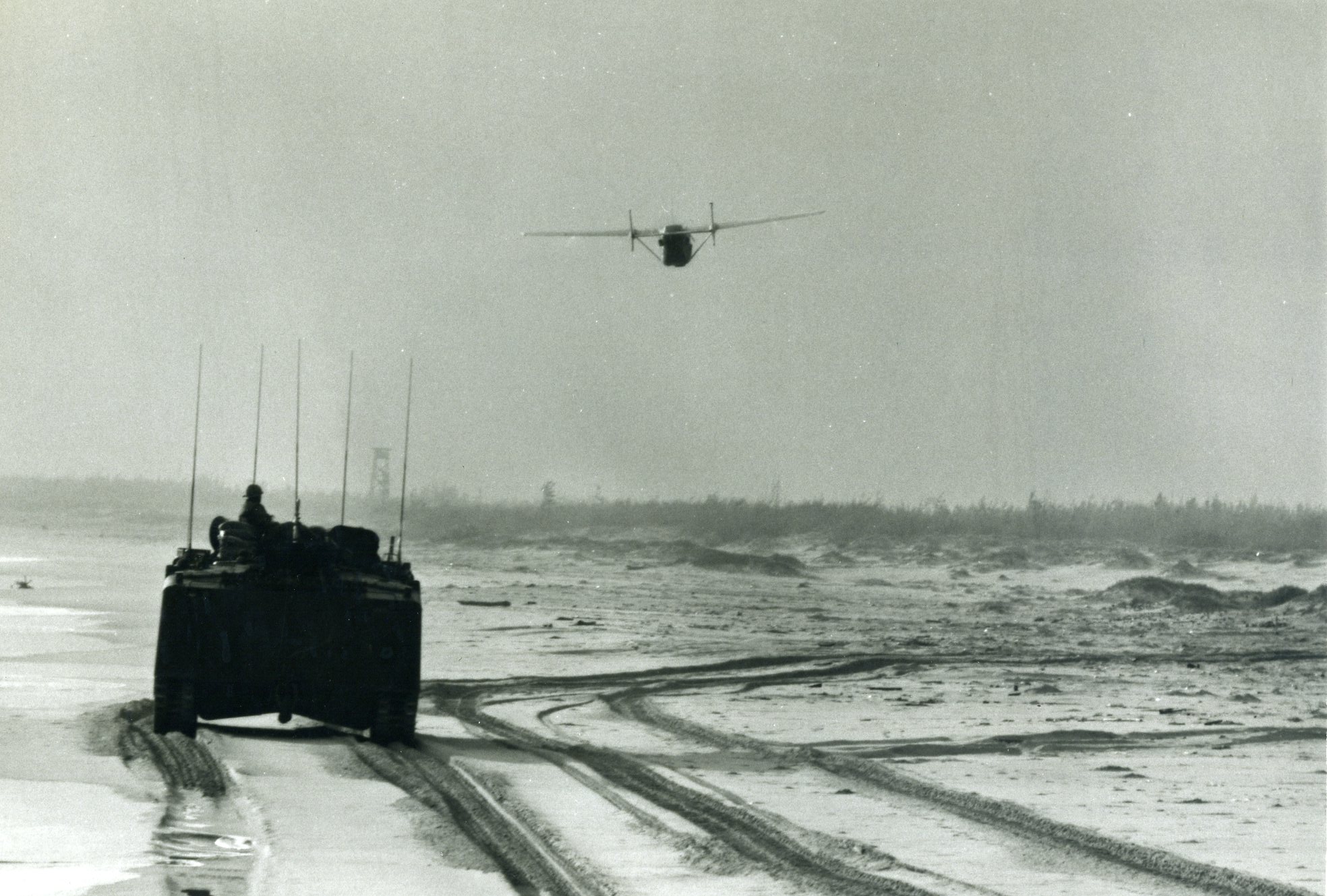
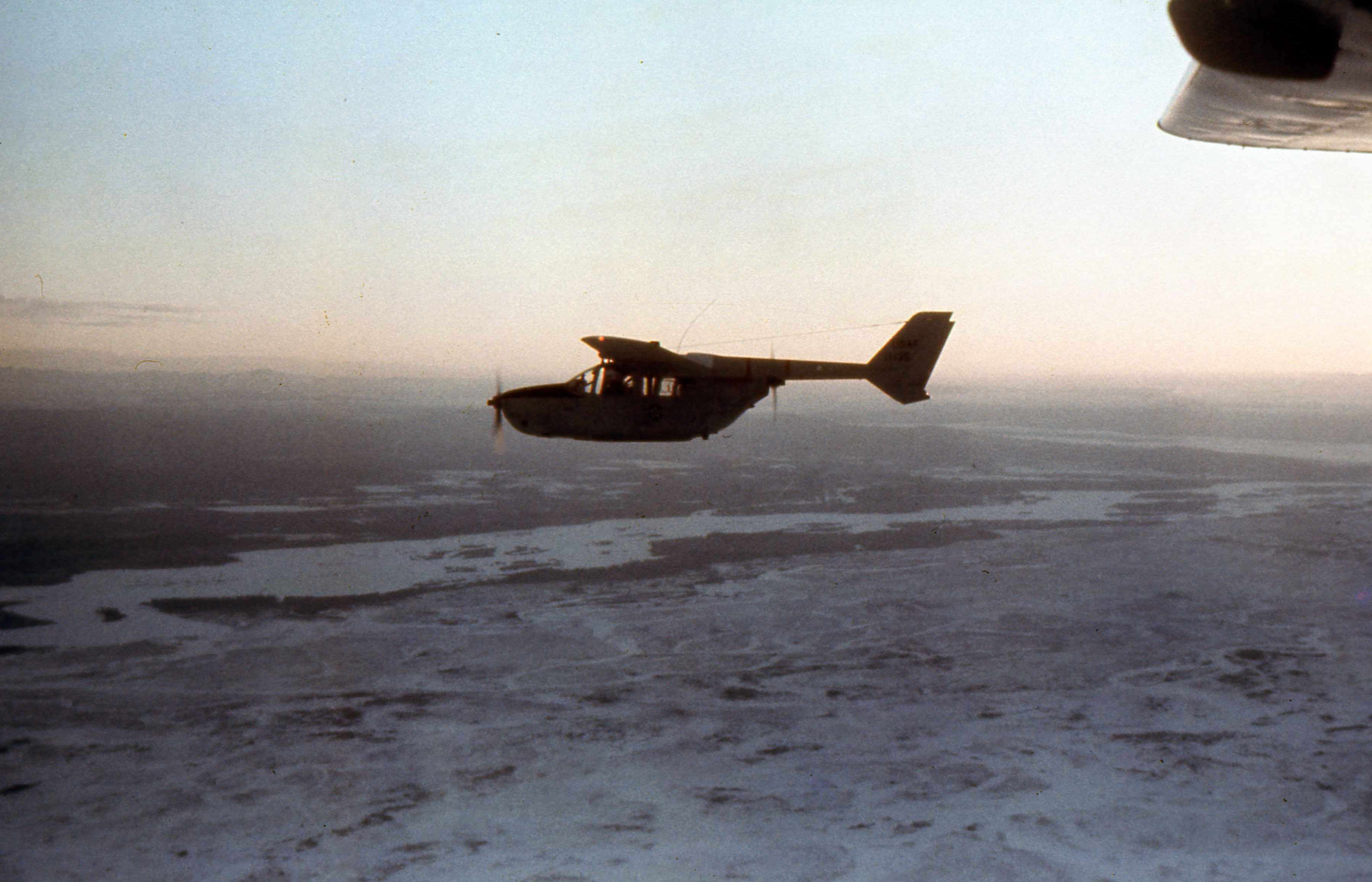
Click any frame to view full-size. All photographs are U.S. Government / U.S. Air Force public-domain imagery via Wikimedia Commons and DoD archives.
05 · Video Archive
Watch the airplane, and the men who flew it.
A curated set of YouTube references — walkarounds, low passes, systems demos, and restoration content from other O-2 operators and museums.
YouTube · Walkaround
O-2A Walk-arounds — Fun With Aviation
Museum walkaround of two Cessna O-2A Skymasters (the “Duck”) covering FAC role, airframe modifications, and details.
YouTube · Inside Look
Cessna O-2A Skymaster N509D — Inside & Low Pass
A civilian-registered O-2A at Teuge Airport: cockpit walkthrough followed by a photo-quality low pass. August 2022.
YouTube · Systems
O-2A Manual Gear Swing — 337 / FAC
Emergency-gear system demo on a Vietnam-veteran O-2A: hydraulic pumping, gear and door sequencing, and fit check.
YouTube · History
Warbird Wednesday Ep. 42 — O-2 Skymaster
Concise, well-produced history and airframe tour of the O-2: origins as a civil derivative, service in Southeast Asia, and design details.
YouTube · Restoration
Newly Restored O-2 Skymaster
Museum project: pulling a weathered O-2 out of storage, refinishing it, and returning it to public display — with Vietnam FAC veteran involvement.
YouTube · In Action
Cessna O-2A — Rare Twin-Boom in Action
Flying footage of a preserved USAF O-2A at Temora Aviation Museum, one of only a handful still airworthy anywhere in the world.
YouTube · Aerial
O-2A Skymaster — Drone View
Drone-tracked flight showing the twin-boom silhouette and pusher-tractor propeller layout that made the O-2 unmistakable in FAC service.
YouTube · Story
Strangest FAC Mission of the Vietnam War
Cambodia, January 1971: a USAF O-2A directs Cambodian-flown MiG-17s against North Vietnamese forces. Recounted from mission records.
06 · Research & References
The paper trail behind the airplane.
Primary sources, technical documents, and reference collections that inform the restoration.
Working method
The project uses two documents in parallel. The civil Cessna P443-12 Illustrated Parts Catalog supports standard 337 part-number work; the USAF T.O. 1L-2A-4 covers USAF-installed hardware absent from the civil catalog — skids, hardpoints, pylons, armament wiring, antenna doublers, and other military-only components.
Interchangeability is treated as an assertion, not a default. A civil 337 part earns installation only when its approved part number, suffix, model, and serial effectivity match the M337B configuration on MSN 0142. Similar appearance and shared 15xxxxx numbering aren’t enough — especially anywhere near military windows, fuel routing, wiring, recovery structure, or hardpoints.
- Cessna O-2 Skymaster — Wikipedia
Reference · Production, variants, operators - O-2A Skymaster — National Museum of the USAF
Government · Official fact sheet - O-2A Skymaster — Hurlburt Field
Government · FAC training history - This Plane Made all the Difference in Vietnam — HistoryNet
Feature · Mission profile & operator accounts - The Forward Air Controllers of Vietnam — HistoryNet
Feature · FAC role, 20th TASS, cockpit reality - FAA Aircraft Registry Inquiry
Government · N-number lookup - Randy’s Warbird Profiles — Cessna O-2 Skymaster
Feature · Warbird operator perspective - Barnstormers · Parts & Airframe Sourcing
Marketplace · Weekly parts scan
07 · Get in Touch
Know an O-2 part? Fly one? Flew one?
If you can help with parts, records, cockpit hardware, or if you served on the O-2A and want to share the airplane’s story with the next generation — we’d like to hear from you.